
How Long Does a Gas Fire Last: Repair or Replace?

There is no fixed lifespan for a gas fire. Some keep working safely for many years; others are not worth repairing much sooner. What usually decides it is not age but three practical things: whether parts are still available, whether the fire passes its safety checks, and how it is built. A well-serviced fire from a maker that still supports it can go on a long time, while an old design with discontinued parts may be finished the first time something fails.
How many years should a gas fire last?
Nobody can give an honest single number. The working parts of a gas fire, such as the thermocouple, ignition and pilot assembly, are made to be replaced over its life, so a fire rarely wears out all at once. What runs out is support: manufacturers stop making parts for older models, some leave the market, and the ceramic parts that give a fire its look can crack and become impossible to match.
Regular servicing helps, because small problems get caught before they become a failed safety check. Our guide on how often a gas fire should be serviced explains what that involves.
Signs a fire is near the end
The clearest sign is that parts can no longer be had. If a replacement pilot assembly or gas valve cannot be found for your model, a fault that would be a simple repair on a newer fire can end this one. Repeated faults are the next sign: a fire that needs an engineer every winter is telling you something.
Physical damage matters too. Cracked radiants on an older radiant fire, or a cracked or crumbling fuel bed, can change how cleanly the fire burns, and if the exact parts are no longer made they cannot simply be swapped. A fire that fails its safety checks, for example because fumes spill back into the room, may not be repairable at a sensible cost.
Then there is the design. Many older fires are open-flued: they take their air from the room and send their fumes up the chimney. They can work safely for years when the chimney and ventilation are right, but can lose a good deal of heat up the flue. An old open-flued fire with other problems is often the point to think about replacing.
What can usually be repaired
Plenty of faults are repairable if parts are available. A fire that will not stay lit when you let go of the control often has a worn thermocouple, the safety part that keeps the gas on only while the pilot flame heats it. A fire that clicks but will not light usually has an ignition fault, such as a worn electrode, a failed spark generator or a flat battery. Many fires have an oxygen depletion sensor that shuts the fire off if the air in the room runs short; when it fails, the repair is often a new pilot assembly.
Fuel bed parts, such as coals, pebbles and logs, can often be replaced with the manufacturer's own parts, laid out as the manufacturer shows. Pieces from another fire, or extra coals added for effect, can cause sooting and poor combustion. Our gas fires page explains what a service and safety check cover.
When replacing makes more sense
Replacing is usually the better choice when the parts you need are no longer made, when the same fire keeps failing, when a crack or a failed safety check cannot be put right, or when you want a fire that puts more of its heat into the room. It is also worth considering if you are changing the fireplace anyway.
A new fire gives you a choice of flue. Glass-fronted balanced-flue fires take their air from outside and are sealed from the room, while other designs suit an existing chimney; the engineer will look at what you have first. If your fire sits in front of an old back boiler that heats the house and water, the decision is bigger, because the two share a fireplace and often a flue, so talk about boiler replacement at the same time.
Does running a gas fire cost less than the central heating?
It can, but it depends on the fire and the house. Heating only the room you are sitting in, for an evening, can use less gas than heating the whole house, and that is a fair argument if the rest of the house can stay cool.
Against that, many older gas fires are not very efficient, and an open-flued fuel-effect fire can send a good share of its heat up the chimney. A modern boiler with good controls, such as a room thermostat and thermostatic radiator valves, also changes the comparison, because it lets you keep the rooms you use warm and the rest cooler. Ask your engineer how efficient your fire is.
When a fire is labelled At Risk or condemned
An engineer who finds a dangerous gas fire will not leave it in use. Gas engineers follow a set procedure: a fire that is an immediate danger is usually disconnected, with your permission, and labelled Immediately Dangerous, while one that is unsafe but not an immediate danger is turned off and labelled At Risk. You should be given a warning notice explaining what was found. People often call this having the fire condemned.
The label is not something to work around. The fire stays off until it is repaired and checked again, or replaced, in a rented home as much as your own. If you are unsure why it was labelled, ask the engineer to show you the problem.
If you are in Edinburgh or Midlothian and want an older fire serviced or checked, see our gas fires page.
Need a professional for your next project?
Get a free, no-obligation quote for your next project.
Get a Free QuoteFound this useful? Make us a preferred source in Google and our future guides will show up more often for you.
More from the blog
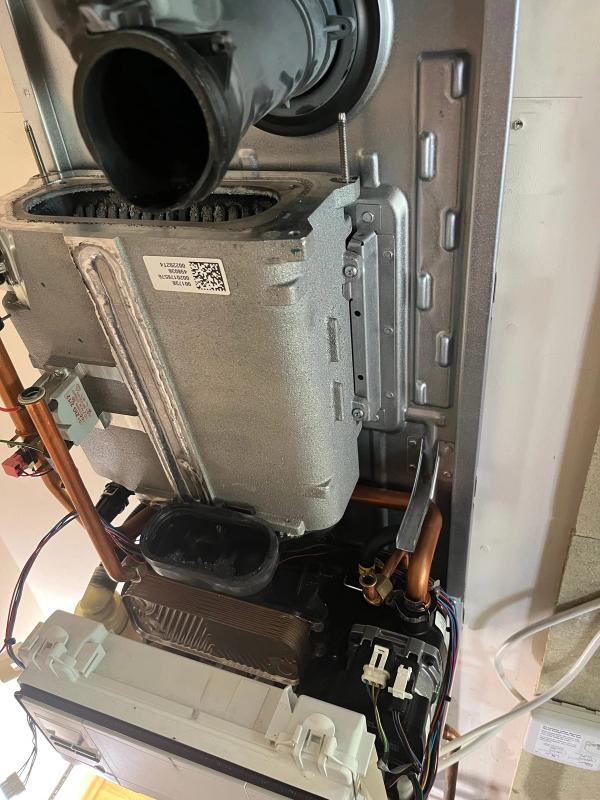
Boiler Not Working? Common Faults and What to Check First
Before calling an engineer, a few safe checks often find the cause. Here is what to look at, what common symptoms usually mean, and where the DIY stops.
View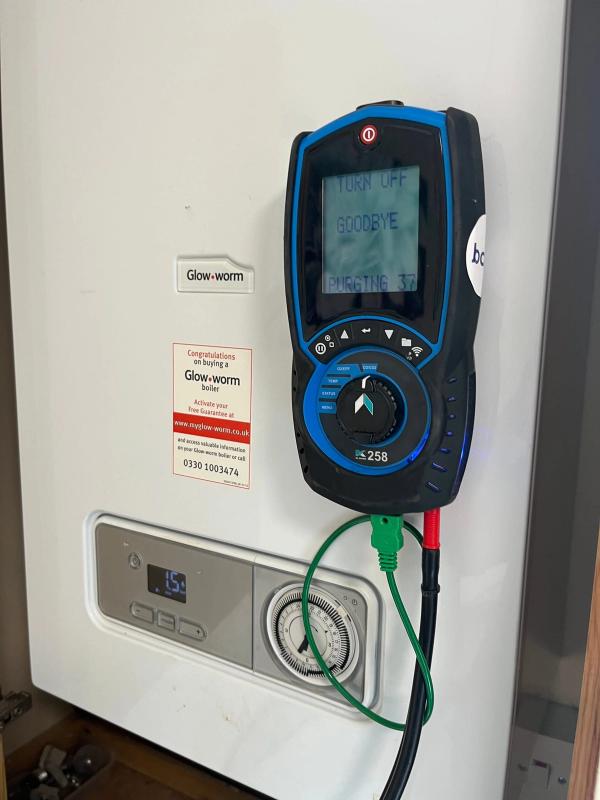
Boiler Service Plans vs a One-Off Annual Service
A one-off service and a service plan both get the boiler looked at each year. The difference is in what else is included, and that varies a great deal by provider.
View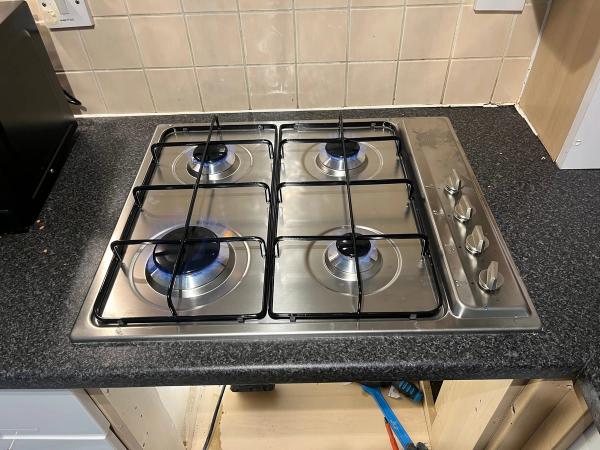
Can I Fit My Own Gas Cooker?
Swapping a gas cooker looks like a push-and-twist job. Here is what the law actually says, and what a proper connection involves.
View